Introduction
The novel Kindred by Octavia Butler is told from the perspective of Dana, a black woman living in 1976. Dana and her husband Kevin, both of whom are writers, move to Los Angeles and attempt to settle into their new lives. As Dana unpacks, she begins to feel dizzy and finds herself transported to a river where a little boy is drowning. She quickly saves him only to have the little boy’s father point a gun at her head. She is suddenly transported back to her Los Angeles home where Kevin claims that she had been gone only a few seconds. Later that night, she feels dizzy again. She is again transported to the boy and once again finds herself saving him from danger. Dana introduces herself to the little boy who is a bit older than when she had last seen him. He introduces himself as Rufus and tells her that the year is 1815. When Dana returns home, she and Kevin begin to comprehend the situation.
Dana gets transported back in time, specifically the early 1800’s, to a plantation in Maryland when Rufus finds himself in danger. Dana is only able to return when she is in a life-threatening situation herself. Dana continues to time travel experiencing the realities and horrors of slavery firsthand. From working in the fields to seeing the consequences that slaves face for disobeying their masters, Butler gives her readers a new perspective on slavery through Dana’s eyes. As Dana spends her time on the plantation, she devotes her time to making a difference in the slaves’ lives by teaching them to read and attempting to influence Rufus.
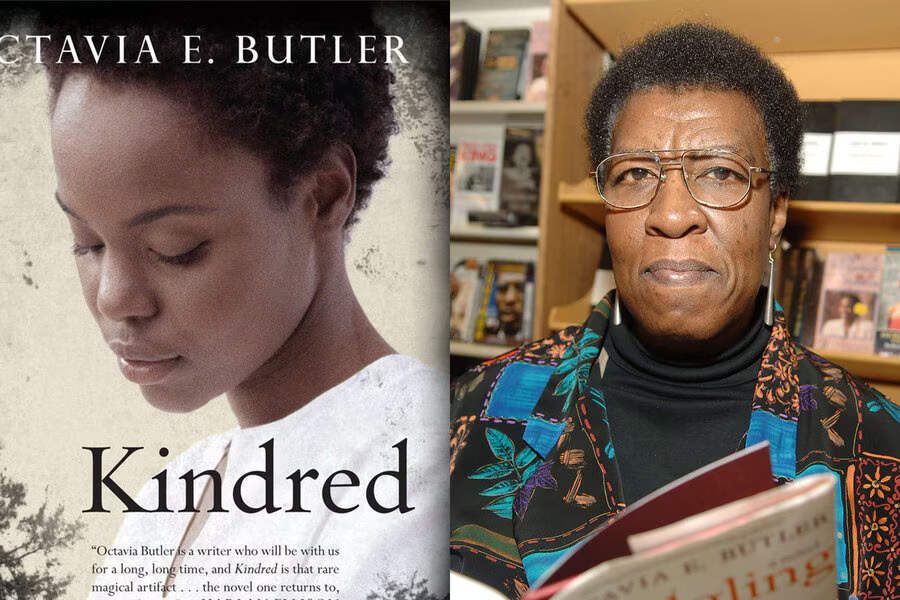
Octavia Butler is a notable female African American author who has received the MacArthur Genius Grant, PEN West Lifetime Achievement Award, and several other awards for her written works. Her work usually explores themes of “Black injustice, global warming [and] women’s rights and political disparity” (“About the Author”). Butler was inspired to write Kindred after overhearing some teenagers diminishing the severity of slavery (Rothberg). In order to capture the true cruelty, she researched extensively before publishing the novel in 1979. Kindred is Butler’s best-selling work and is taught extensively throughout colleges and high schools all over the nation (Rothberg). In 2003, the novel won the Rochester, New York book of the year award. Kindred has been adapted into a graphic novel and a mini-series that premiered on FX in 2022.
Overall, this novel has been widely well-received by Butler’s audience and peers. After reading the novel, I believe Kindred achieved Butler’s goal of capturing the true essence of slavery. History can often be erased and many of the negative roots that America was built upon seem to be overlooked. But Butler utilizes characters in the novel to give readers a true insight into the lives that slaves had suffered. Butler allows the audience to get to know individuals who are enslaved. Readers discover their stories and their suffering becomes real. As I read this book, I empathized with the pain that slaves endured and became more educated on the actual severity of slavery.
The Underground Railroad
In the novel, there are two main instances in which The Underground Railroad is implicitly referenced. The first instance is when Dana gets concerned about Rufus reading a history text and refers to Harriet Tubman who “was going to cost Eastern Shore plantation owners a huge amount of money by guiding three hundred of their runaway slaves to freedom” (Butler 140-141). The second time is when Kevin finally returns to 1976 and explains to Dana that he was helped slaves escape: “I fed them, hid them during the day, and when night came, I pointed them toward a free black family who would feed and hide them the next day” (Butler 193).
The Underground Railroad was a network of people, homes, and routes that guided fugitive slaves in the south to freedom in the north (National Geographic Society, 2024). There were a series of code names used by those involved:
- “Conductors” – those who guided slaves along the routes to the North (some notable conductors include Harriet Tubman, John Fairfield, William Still, and John Brown)
- “Stations” – places, oftentimes homes, where slaves found shelter along the route
- “Station Masters” – those who hid the slaves at the stations
- “Passengers” – slaves escaping to freedom
- “Cargo” – passengers who had safely arrived at the stations
Estimates show that between 1810-1850 approximately one-hundred thousand slaves escaped to the North by way of the Underground Railroad (National Geographic Society, 2024). Despite the significant number of fugitive slaves that found freedom, the Underground Railroad was by no means an easy journey. Not to mention the severe consequences that fugitives and individuals working the Underground Railroad would face if caught or captured.
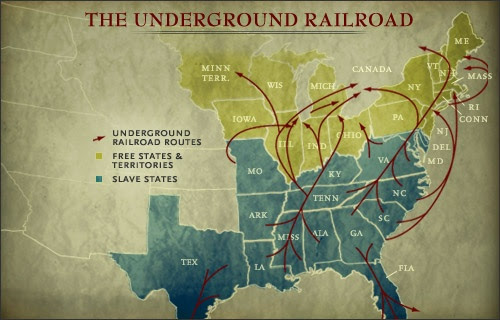
Slaves first had to overcome the obstacle of escaping their master. Fugitives led by their conductor would move at night from one station to the next, generally traveling anywhere between 10-20 miles on foot (National Geographic Society, 2024). Sometimes travel by train or boat was necessary. The length and location in which the slave’s found refuge was dependent on a multitude of factors such as their starting location and the communication among the station masters.

Authentic Stories…
William Still was born a freeman in 1821 after his father, Levin Steel, had purchased his freedom. In 1847, he began working as a clerk for the Pennsylvania Society for the Abolition of Slavery. Here he also worked actively to guide fugitive slaves who came through Philadelphia on their journey to seek freedom. Still kept many records of the fugitives he aided but destroyed many of them in fear that the records would be used against them. But after the Civil War, his children convinced him to write stories of the people he encountered and helped along the Railroad (The Freedom Center, 2024). In 1872 these stories were published as a book, The Underground Railroad. This historical record gives readers insight into the personal experiences and horrors faced by slaves not only during their enslavement but their escape too…
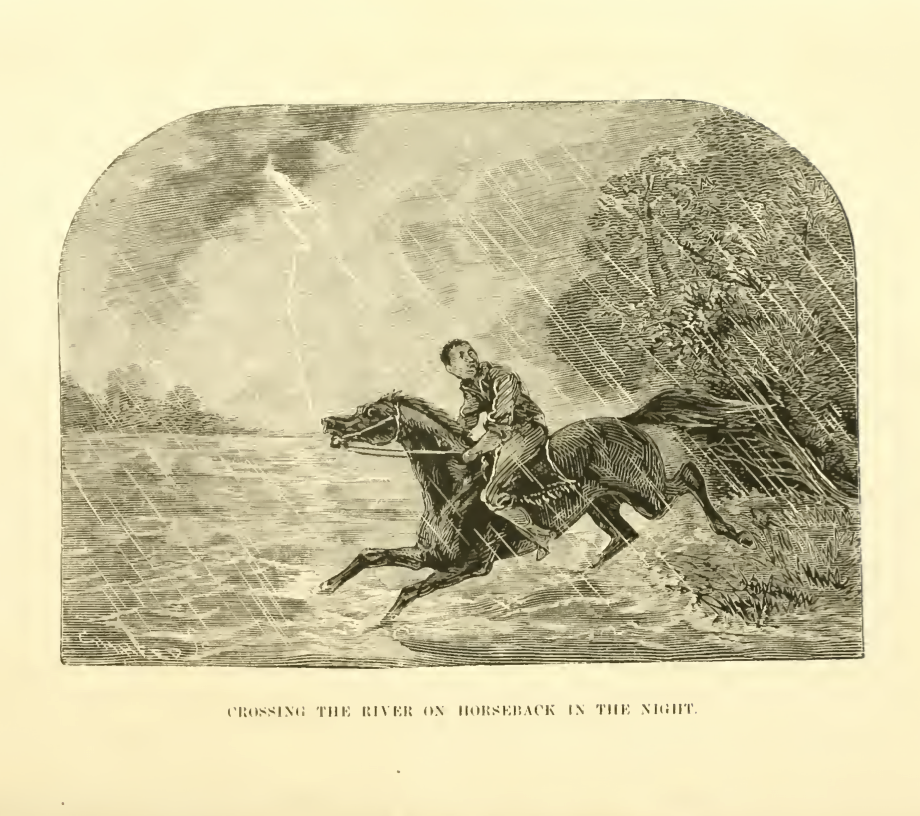
One chapter tells the story of a man Robert Brown who escaped his master Col. John F. Franic from Martinsburg, VA. “In order to effect his escape, Robert was obliged to swim the Potomac River on horseback, on Christmas night, while the cold, wind, storm and darkness were indescribably dismal” (Still 121). After crossing he rode about 40 miles until he abandoned his horse the next morning. He then made his journey on foot for about 2 days without shelter or food until he reached help in Harrisburg.
In another case, we hear the stories of two mothers, each with a baby, who escaped their master, Massey. The mothers Elizabeth and Sarah had been falsely promised freedom and decided to flee when they could no longer take the beatings. Elizabeth explains how Massey had beat her: “he tied me to a locust tree standing before the door and whipped me to his satisfaction”(Still 508). Sarah’s testimony was no better: “my clothing was all stripped off above my waist and then he whipped me till the blood ran down my heels” (Still 508).
Still’s book provides an extensive account of personal experiences and stories of fugitive slaves. Although these stories are devastating and in some cases even disturbing, they open new doors allowing the readers to see the true brutalities of slavery. To read more of Still’s work visit The Underground Railroad by William Still.
The Underground Railroad in Kindred
The Underground Railroad is referenced briefly throughout the novel but serves an important purpose. It provides a broad historical context for the novel while also symbolizing themes of resistance and hope among not only the enslaved, but the black community in general. When Dana is transported back into the past, she experiences the extremes of racism and discrimination through slavery. In Dana’s present life, she faces more subtle but significant problems that arise from being a black woman. While at her job, Dana’s boss jokes about Kevin and Dana writing “chocolate and vanilla porn” (Butler 56) referring to the color of their skin. Other employees comment on Kevin and Dana’s relationship: “the weirdest looking couple I’ve ever seen” (Butler 57). Interracial relationships were yet to be normalized in the 1970’s. Dana and Kevin even face backlash from their own families when they told them about their relationship and the consideration of marriage. This highlights just one of the many burdens that Dana faces due to the color of her skin. By referencing the Underground Railroad, Butler demonstrates the continued struggle of oppression and resistance against racism and discrimination. Even with the Civil War and Civil Rights Movement, Blacks continue to fight back against the inequalities of society. The Underground Railroad served as a passageway to freedom for the enslaved, and Blacks in modern society have to navigate their own passageway to equality too.
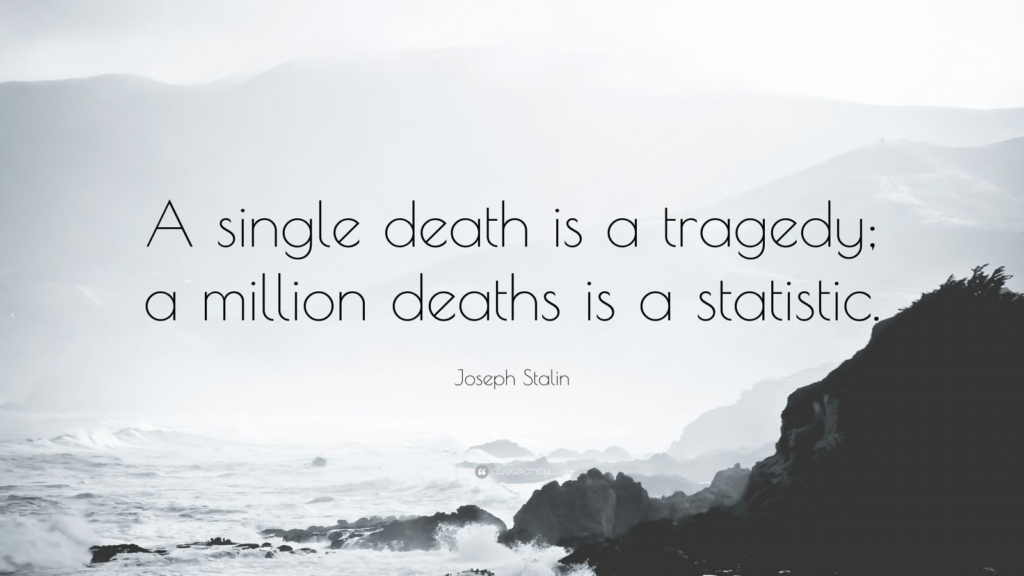
Butler’s brevity of referencing the Underground Railroad serves an important purpose too. Joseph Stalin once said, “a single death is a tragedy, a million deaths are a statistic”. Not giving too much emphasis to the Underground Railroad and instead focusing on the characters, ensures that every character in the novel has a personal story. Therefore their death becomes a tragedy.
When the history of slavery and the Underground Railroad is taught in schools, students are given numbers and brief descriptions. The true severity and cruelty of slavery is not captured. Butler doesn’t reference the Underground Railroad to give a history lesson but instead to provide historical context. She focuses on the individual stories of the characters such as the pregnant woman who was “beat… until the baby came out of her” or the woman whose master “had cut three fingers from her right hand when he caught her writing” (Butler 191). Butler was inspired to write this novel to showcase the brutal realities of slavery and is able to achieve her purpose through these personal stories.
In the previous section, I gave some background information to the Underground Railroad. When you were reading, in what moment did you feel more empathy, when I told you that about one-hundred thousand slaves that escaped through the Underground Railroad? Or when you read the personal stories of Robert, Elizabeth, and Sarah?
Works Cited
“About the Author,” Octavia E. Butler, https://www.octaviabutler.com/theauthor. Accessed 17 November 2024.
Butler, Octavia E. Kindred. Boston, Beacon Press, 2008, pp. 140-41, 193.
Crash Course. “The Underground Railroad: Crash Course Black American History #15.” YouTube, 27 Aug. 2021, youtu.be/Byh- HityBIM?si=SXNNLwoDJPRSEbVP&t=271.
National Geographic Society. “The Underground Railroad.” National Geographic: Education, 3 Dec. 2024, education.nationalgeographic.org/resource/underground-railroad/.
Rothberg, Emma. “Octavia Butler.” National Women’s History Museum, 2021, https://www.womenshistory.org/education-resources/biographies/octavia-estelle-butler. Accessed 18 November 2024.
Still, William. The underground railroad. A record of facts, authentic narratives, letters &c., narrating the hardships, hair-breadth escapes and death struggles of the slaves in their efforts for freedom. [Philadelphia, Pa., Cincinnati, Ohio etc. People’s publishing company, 1879] Pdf. Retrieved from the Library of Congress, <www.loc.gov/item/31024984/>.
WGBH Interactive Multimedia Group, and PBS Online. “The Underground Railroad.” Africans in America: America’s Journey Through Slavery, WGBH Interactive, www.pbs.org/wgbh/aia/part4/4p2944.html#:~:text=In%201786%20George%20Washington%20complained,the%20then%20emerging%20steam%20railroads. Accessed 18 Nov. 2024.
Whipple, Madison. “What Was the Underground Railroad?” The Collector, 25 Aug. 2023, www.thecollector.com/what-was-the- underground-railroad-freedom-seekers/.
“William Still.” National Underground Railroad Freedom Center, freedomcenter.org/heroes/william-still/. Accessed 20 Nov. 2024.