By Aubrey Dunbar
Summary
In “The Bees” by Dan Chaon, we are introduced to Gene, a father and husband who is helping his family get by with their lower-class status. Gene loves his family, but he knows he isn’t deserving of the life he lives. He is a recovering alcoholic who suffered greatly from withdrawals and delirium tremens. Additionally, he is haunted every day by his past life. Gene left his first family in Nebraska and hasn’t heard from them since. His past life is kept a secret from his current family, and it begins to drag him down throughout the story. He begins to hallucinate on a daily, and he slowly starts to lose his mind.
Something bad has been looking for him for a long time, he thinks, and now, at last, it is growing near.
(Chaon 5)
Dan Chaon
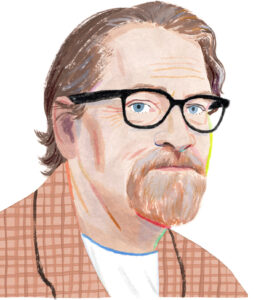
Dan Chaon was born June 11, 1964, in Sidney, Nebraska. He grew up in a small town outside of Sidney and was adopted at an early age. At just five years old, Chaon knew what he wanted to do with his life: tell stories. After graduating from high school, he attended Northwestern University, graduating with a Bachelor of Arts degree in 1986. He then furthered his education at Syracuse University, graduating in 1990 with a Master of Arts diploma. His short story, “The Bees,” was published in his fifth book titled Stay Awake in 2012. Although this book did not receive any particular awards, Chaon has gathered awards from other books, such as the Academy Award in Literature, the Pushcart Award, the O. Henry Prize, the Cleveland Arts Prize for Literature, and the Notable Book Award (Chaon).
Facts from 2012
About 121 million adults drove while under the influence of alcohol (Centers for Disease Control and Prevention).
The poverty rate remained unchanged [from 2011] at a high of 15.0 percent, and median household income remained unchanged at $51,017 (Center on Budget and Policy Priorities).
35% of children (24.7 million) lived in single-parent families (Annie E. Casey Foundation).
There were about 505 alcohol-impaired driving episodes for every 1,000 population (Centers for Disease Control and Prevention).
The Midwest U.S. Census region had the highest annual alcohol-impaired driving rate at 573 per 1,000 population (Centers for Disease Control and Prevention).
These statistics highlight the challenges that families faced during this time, such as the rise in single-parent households, as shown by characters like Mandy and DJ. They also draw attention to the alarming number of alcohol-impaired drivers in 2012, with the Midwest region, including Nebraska and Iowa, where the story takes place, experiencing the highest annual rates. Furthermore, they emphasize the poverty of this era, as seen in Gene’s family, who are struggling to make ends meet. These issues all help paint a clearer image of the economic and social struggles faced by many during this period.
Delirium Tremens
Delirium tremens (DTs), the most severe form of alcohol withdrawal, is a life-threatening condition that happens in about 10% of untreated cases (Smith-Alnimer and Watford 72D). It is most common in chronic heavy drinkers, whose brains have adapted over time to the constant presence of alcohol. Alcohol acts as a depressant on the brain by increasing GABA, which calms brain activity, and suppressing NMDA receptors, which excite the brain (Keys 41). When alcohol is suddenly removed, the brain becomes hyperactive, causing symptoms like tremors, seizures, hallucinations, confusion, and agitation. These symptoms typically begin 48 to 72 hours after the last drink, although they can appear up to a week later (Keys 44).

Early signs of alcohol withdrawal, such as anxiety, shaking, and trouble sleeping, can escalate into DTs if not treated. Symptoms of delirium tremens include a high fever, rapid heart rate, high blood pressure, anxiety, severe confusion, insomnia, seizures, shaking, and vivid hallucinations, often described as seeing or “feel[ing] insects on [the] skin” (Sachse 42). These symptoms can be fatal if complications like dehydration, heart problems, or respiratory failure occur. The condition also causes severe sweating and an overactive nervous system, making it a hazardous medical emergency (Smith-Alnimer and Watford 72C).
For people who repeatedly go through these cycles of heavy drinking and withdrawal, the condition worsens over time because of something called “kindling” (Keys 42). This phenomenon makes each withdrawal episode more severe than the last, which highlights the importance of recognizing and treating alcohol withdrawal as early as possible.
 Treating DTs involves using medications to calm the brain and prevent seizures. Benzodiazepines are commonly prescribed because they mimic alcohol’s effects on the brain and help reduce symptoms (Smith-Alnimer and Watford 72G). Patients are also given thiamine and other vitamins to prevent further complications (Sachse 42). Nurses play a crucial role in watching for early symptoms, administering medications, and keeping the environment calm to prevent the patient from becoming more agitated (Smith-Alnimer and Watford 72D).
Catching alcohol withdrawal symptoms early is key to preventing DTs and saving lives. Patients who recover from DTs often need long-term support to deal with their alcohol use, including counseling and rehab programs. This kind of care helps address the root cause of the problem and gives patients a better chance at long-term recovery (Keys 44).
Gene’s Withdrawal
Learning about delirium tremens (DTs) changes how we understand Gene’s actions and struggles in Dan Chaon’s text. DTs is a severe, life-threatening condition that can occur during alcohol withdrawal, with symptoms like agitation, sweating, and hallucinations. Its mortality rate of up to 15% and the need for urgent medical attention show that Gene’s experience is not just a personal failure but a battle with a dangerous medical emergency (Sachse 42). This understanding allows us to approach his behavior with more empathy.
In the first quote, “He finds he has a hard time keeping his moodiness in check. He can feel his temper coiling up inside him,” Gene’s agitation is likely a symptom of DTs (Chaon 8). Symptoms like uncontrollable mood swings and irritability are common during severe withdrawal (Sachse 41). Knowing this, we see that his temper is not a reflection of his character but a natural response to withdrawal. Instead of judging him for losing control, we can look at his effort to “[keep] his moodiness in check” as part of his fight to improve himself, even as his body works against him.
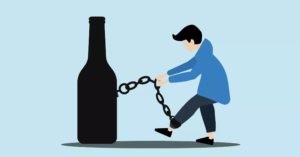 The second quote, “He thinks of the way [the nurse had] leaned over him and brushed his hair as he stared at her, imprisoned in a full body cast, sweating his way through withdrawal and DTs” (Chaon 6), emphasizes the severity of delirium tremens. The description of him as “imprisoned” and “sweating” highlights the physical toll, including symptoms like hyperthermia and intense nervous system overreaction (Sachse 41). This context shows that Gene’s suffering is not just the result of poor decisions but of a life-threatening crisis. The care provided by the nurse points to the seriousness of his condition, making it clear that he isn’t simply a man who abandoned his family—he is someone fighting to survive.
By understanding DTs, we see Gene’s behavior in a new light. His struggles become less about weakness and more about survival. This more profound knowledge encourages empathy, potentially shifting our interpretation of his story to one of strength.
Works Cited
Chaon, Dan. The Bees. In Stay Awake: Stories, Ballantine Books, 2012, pp. 1–26.
Chaon, Dan. “Biography.” DanChaon.com, https://danchaon.com/biography.
Keys, Vicky A. “Emergency: Alcohol Withdrawal During Hospitalization.” The American Journal of Nursing, vol. 111, no. 1, Jan. 2011, pp. 40–42, 44–46. Lippincott Williams & Wilkins. JSTOR, https://www.jstor.org/stable/25769678.
“More Children Living in Single-Parent Families.” The Annie E. Casey Foundation, 1 Aug. 2012, https://www.aecf.org/blog/more-children-living-in-single-parent-families#:~:text=In%202012%2C%2035%25%20of%20children,4%20million%20children)%20since%202000%20since%202000).
Sachse, Donna S. “Emergency: Delirium Tremens.” The American Journal of Nursing, vol. 100, no. 5, May 2000, pp. 41–42. Lippincott Williams & Wilkins. JSTOR, https://www.jstor.org/stable/3521873.
Smith-Alnimer, Marie, and Marva F. Watford. “Alcohol Withdrawal and Delirium Tremens.” The American Journal of Nursing, vol. 104, no. 5, May 2004, pp. 72A, 72C-72D, 72G. Lippincott Williams & Wilkins. JSTOR, https://www.jstor.org/stable/29745651.
“Vital Signs: Alcohol-Impaired Driving Among Adults — United States, 2012.” Centers for Disease Control and Prevention (CDC), 7 Aug. 2015, https://www.cdc.gov/mmwr/preview/mmwrhtml/mm6430a2.htm.