by Emily Jung
Background on “The Yellow Wallpaper” by Charlotte Perkins Gilman

“The Yellow Wallpaper” by Charlotte Perkins Gilman is an epistolary short story of a woman suffering from postpartum depression wrongly diagnosed as hysteria by her husband, John, a doctor. She is prescribed the “rest cure,” during which she is “absolutely forbidden to ‘work’ until [she] is well again” (Gilman 648). She is instructed by her husband to stay in a room described as a nursery with an old, peeling yellow wallpaper. She begins to fixate on the small details of the wallpaper which is described to have a pattern like “a broken neck and two bulbous eyes [staring] at you upside down” (Gilman 649). As she continues to rest, she begins to spiral and obsesses over the idea of freeing the woman who is shaking the pattern (Gilman 655). One night after everyone had gone, she began tearing at the wallpaper. When John returns home, he finds her creeping around the room and faints. Despite his reaction, she continues to “creep over him every time” (Gilman 656).

Charlotte Perkins Gilman was an American feminist and author of the late 1800s and early 1900s known for writing “The Yellow Wallpaper.” She married Charles Stetson in 1884 but found domestic life to be unsuited for her (Kaüper). After the birth of her first daughter, she suffered from postpartum depression but was instead diagnosed with hysteria and prescribed the rest cure by Dr. Weir Mitchell (Carpenter). After following the rest cure and only feeling more distressed, she discontinued the treatment and was inspired to write “The Yellow Wallpaper” after her own experiences.
The Yellow Wallpaper was originally not well received by literary critics. Horace Scudder, an editor of the Atlantic Monthly in the 19th century, upon receiving Gilman’s work, rejected the story due to its eerie mood and horror-like atmosphere (Fanshier). Other critics of the time period responded similarly to the story, treating it as a disturbing horror story. However, in the 1970s, feminist works written by white women in the 19th century began to be rediscovered, including “The Yellow Wallpaper” (Fanshier). The story began to be interpreted the way it was written: it was interpreted as a critique of the mistreatment of women’s health and sexism present in society.
The History of the Diagnosis of Female Hysteria in the 1800s
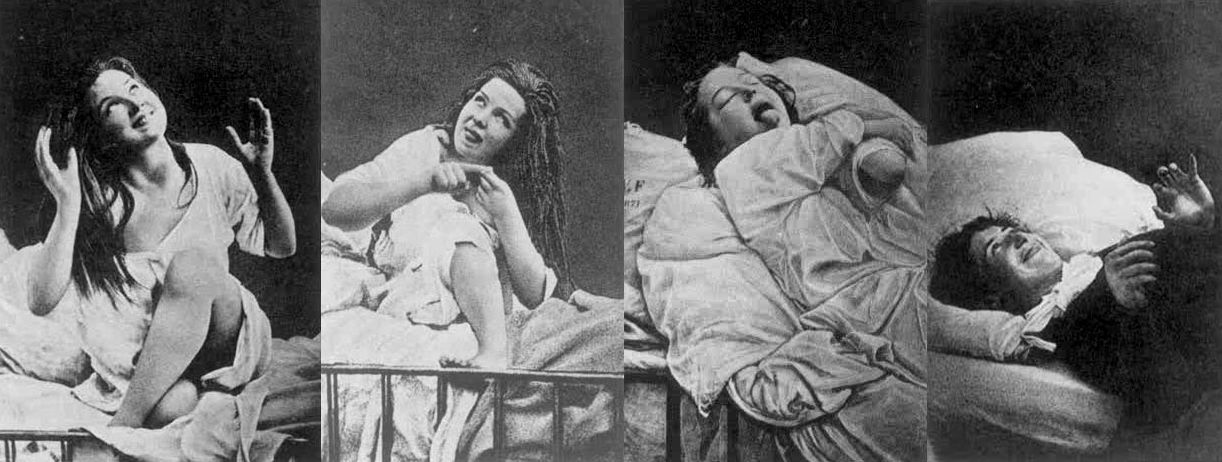
Firstly, what was hysteria?
Hysteria was used by male physicians to explain any seemingly unexplainable medical conditions in women. Throughout history, the causes of hysteria were commonly attributed to a “malady in the womb” (Micale). Common treatments for hysteria included immediate marriage, impregnation, or the usage of aromatic substances on the uterus to help the uterus return to a normal state (Micale). The diagnosis of hysteria was not removed from the American Psychiatric Association’s DSM until 1980 (Micale).
A Deeper Dive into the History of Hysteria
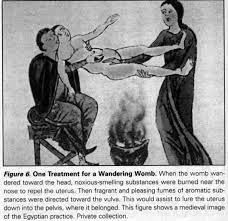
The history of the female hysteria can be traced back to Ancient Egypt in which “the first description referring to the ancient Egyptians dates to 1900 BC (Kahun Papyrus) and identifies the cause of hysterical disorders in spontaneous uterus movement within the female body” (Tasca et. al 110). In fact, it is the “first mental disorder attributable to women” before the common era. Some of the symptoms associated with hysteria were “clonic seizures and the sense of suffocation and imminent death” (Tasca et. al 110), all attributed to a uterus movement in the body, and there were different treatments depending upon the position the uterus was believed to have moved to; a fragrant substance would be placed on different parts of the body relating to the position of the uterus.

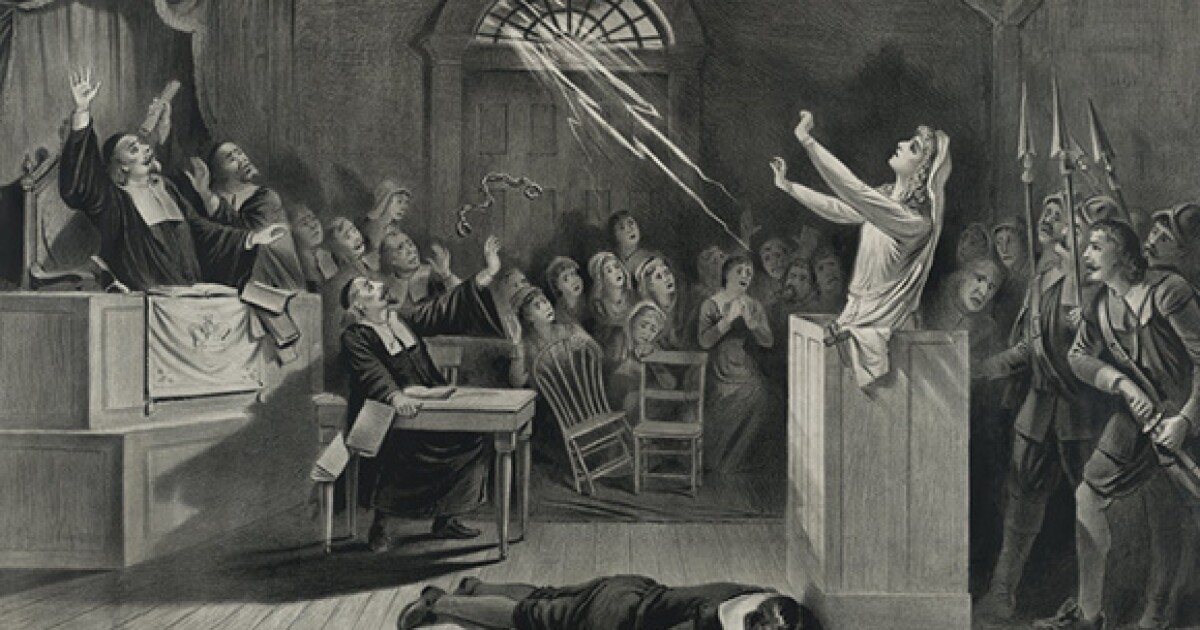
During the course of history, the definition of hysteria has changed drastically. In Ancient Greece, the cause of hysteria was agreed by many philosophers to be attributed to “the lack of a normal sexual life” (Tasca et. al 110). Thus, treatments for the condition were to partake in sexual activities, but also with the usage of fragrant substances such as those used in Ancient Egypt (Tasca et. al 110). However, in the Middle Ages, the causes of hysteria began to shift towards religion; hysterical women were believed to have been in demonic presence, and thus, they were subject to exorcism to cure their condition (Tasca et. al 112). Furthermore, the prevalence of witch hysteria in the Middle Ages heavily influenced the views held towards women; women were seen as more perceptible to hysteria, and therefore, more vulnerable to the work of the devil. These perceptions of hysteria waned in the Renaissance period; however, “hysteria still remain[ed] the ‘symbol’ of femininity” (Tasca et. al 113). Despite hysteria being perceived as a feminine disorder, there were also cases in which men were described to be hysteric. In 18th century England and Scotland, it was actually seen as “almost fashionable to be a hysteric man” (Tucker). Being “nervous” or “emotional” as a man was briefly seen as superior, as it showed “a particularly sophisticated nervous system that [their] working class counterparts [did] not [have]” (Tucker). Furthermore, what was typically diagnosed as male hysteria in the 19th century was redefined as shell shock after the events of the First World War; however, these definitions only applied to men until the term post-traumatic stress disorder in 1980 (Tucker).
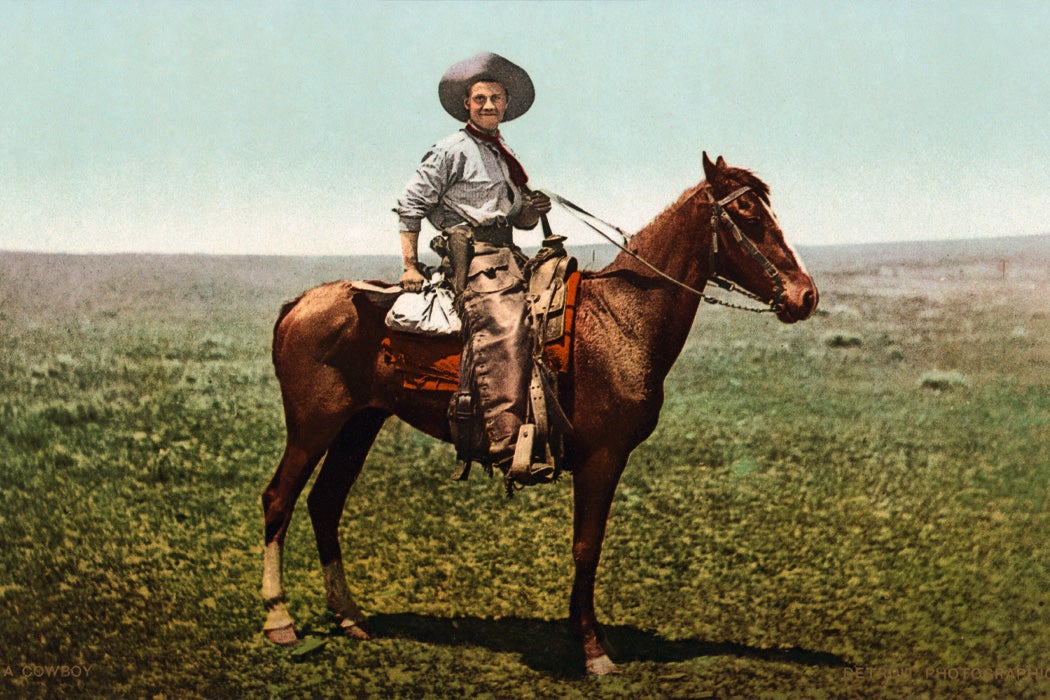
In the 19th century, a treatment called the “rest cure” was popularized by Silas Weir Mitchell, the American physician who also treated Charlotte Perkins Gilman. He would prescribe this treatment preferentially to women diagnosed with hysteria; however, he would, by contrast, prescribe men suffering from hysteria to engage in outdoor activity, called the “west cure” (Stiles). While the west cure would typically reinvigorate and refresh male patients, female patients prescribed with the rest cure would typically worsen in their condition.
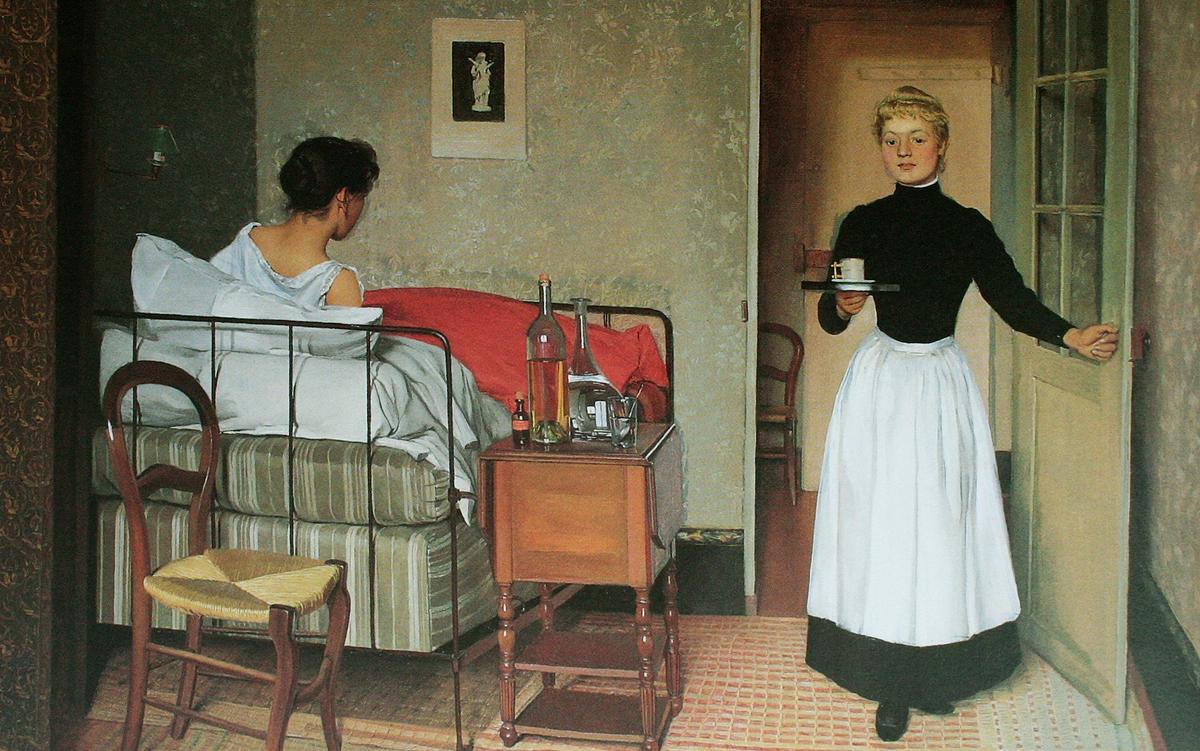
Interpretation of the Impact of Research on “The Yellow Wallpaper”
After gaining some insight on the history of the diagnosis and treatment of hysteria, it becomes easier to sympathize with the narrator of the story. “The Yellow Wallpaper” not only critiques the mistreatment of women’s health in the 19th century but also societal norms that ignored and dismissed female voices and autonomy.
Firstly, John, although it seems as if he cares and wants the best for the narrator, is portrayed as the patriarchal authority as both her husband and a physician. While he expresses concern and care towards the narrator throughout the story, his words and actions instead control and manipulate her. Take, for example, when she says, “I get unreasonably angry with John sometimes. I’m sure I never used to be so sensitive. I think it is due to this nervous condition” (Gilman 648). This quote displays the effects that John’s manipulation has had over her. She is made to believe that her emotions, which are a valid response to the situation she has been put into, can only be a symptom of her supposed “nervous condition.” She questions her own judgment because of John’s constant dismissive attitude towards her.
Furthermore, John’s status as a male physician impedes upon the narrator’s own autonomy. The narrator says herself, “If a physician of high standing, and one’s own husband, assures friends and relatives that there is really nothing the matter with one but temporary nervous depression—a slight hysterical tendency—what is one to do?” (Gilman 648). The narrator feels as if she is powerless against John’s status. Just as John used the diagnosis to control the narrator, hysteria had been used as a means to control and invalidate women in history. Women’s experiences and symptoms had been invalidated, and they were forced into either traditional domestic roles or “rest cures” as a means to “cure” their condition.
The diagnosis of hysteria in history was a convenient way to label a woman’s condition if it defied male expectations of what a woman should be. In “The Yellow Wallpaper,” the narrator’s symptoms most likely align with that of postpartum depression; however, according to men at the time, why would women ever be upset at the miracle of life? Instead, they were labeled as “hysteric” or “nervous,” just as Gilman had experienced in her time. It becomes easier to understand why the narrator was driven to madness, as she was trapped and denied her intellectual and creative outlets; of course, most people would go mad in those conditions! The rest cure, as prescribed by John in the story, attempted to suppress women’s autonomy and agency under the guise that it was only to help the woman and the wallpaper in the story became a symbol of her situation; her obsession with freeing the woman in the paper reflects her own desire to break free of her own circumstances.

Gilman, by weaving both her own personal experiences with the sad realities that many women faced in history as a result of the diagnosis of hysteria, exposes the expectations and standards that many women are forced to comply with under the consequences that they be labeled as “hysteric.” Furthermore, the drastically different treatments of hysteric men and women show the amount of gender bias present in not only the diagnosis of hysteria back then but also in society; while women were expected to stay idle, men were expected to go out, explore, and stay active. “The Yellow Wallpaper” highlights many of these gender biases and shows that the patriarchy will always attempt to control women, even in the situations where women need autonomy the most.
Works Cited
Carpenter, Layne. “Mental Health Therapies: Then and Now.” Laupus Health Sciences Library, 1 Jul. 2019, hsl.ecu.edu/2019/07/01/mental-health-therapies-then-and-now/
Fanshier, Kimberly. “Blog: Critical History of The Yellow Wallpaper.” CoHo Productions, 12 Jan. 2016, cohoproductions.org/blog-critical-history-of-the-yellow-wallpaper/
Gilman, Charlotte Perkins. The Yellow Wallpaper. Virago Press, 1981
Kaüper, Kristin. “Charlotte Perkins Gilman.” History of Women Philosophers and Scientists, historyofwomenphilosophers.org/project/directory-of-women-philosophers/gilman-charlotte-perkins-1860-1935/
Micale, Mark S. “What is hysteria, and why were so many women diagnosed with it? – Mark S. Micale.” YouTube, uploaded by TED-Ed. 24 Sep. 2024, youtu.be/anJKMZCVjxs?feature=shared
Stiles, Anne. “Go rest, young man.” American Psychological Association, Jan. 2012, www.apa.org/monitor/2012/01/go-rest
Tasca, Cecilia et al. “Women and hysteria in the history of mental health.” Clinical practice and epidemiology in mental health : CP & EMH vol. 8 (2012): 110-9. doi:10.2174/1745017901208010110
Tucker, Abigail. “History of the Hysterical Man.” Smithsonian Magazine, 5 Jan. 2009, www.smithsonianmag.com/science-nature/history-of-the-hysterical-man-43321905/