By Lily Ha

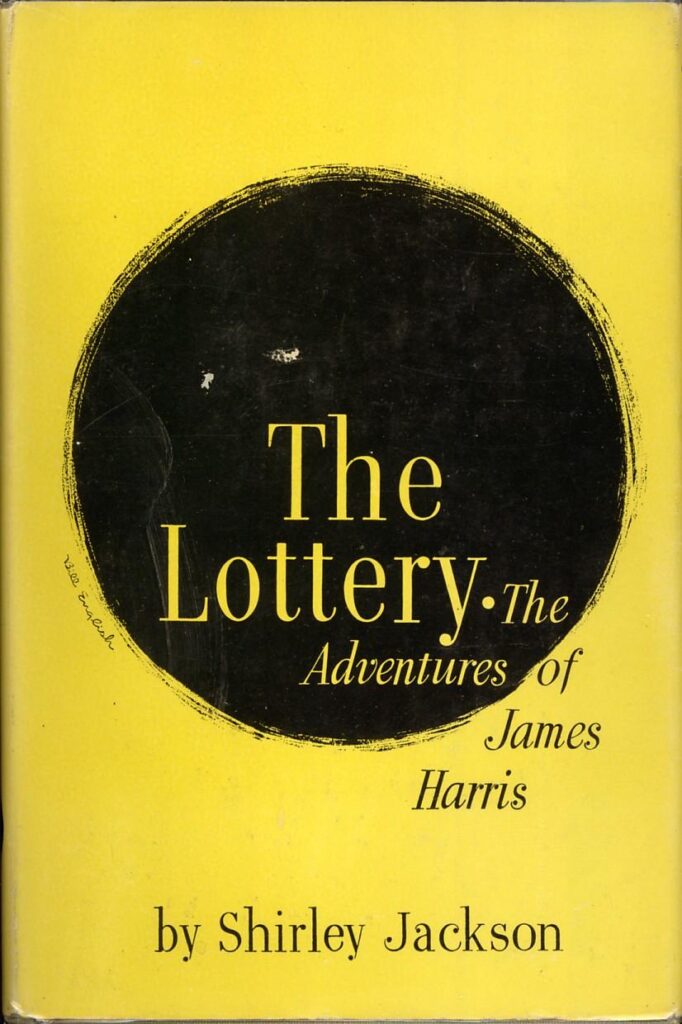
Introduction to The Lottery and Author Shirley Jackson
Shirley Jackson was born on December 14, 1916. She was a famous American author well known for her ability to blend disturbing elements with everyday life. Her works often explore themes of societal norms and human nature (Gale). Besides The Lottery, Jackson is recognized for her works such as The Haunting of Hill House, published in 1959, and We Have Always Lived in the Castle, published in 1962 (Gale). Through her fiction, Jackson tries to critique the darker aspects of human behavior.
Shirley Jackson’s short story The Lottery, was first published in The New Yorker on June 26, 1948 (Franklin). It is one of the most iconic and unsettling pieces of American literature. The story opens in a small village on a warm summer day, where townspeople gather for an annual lottery. As the story unfolds, what begins as a seemingly innocent tradition reveals its shocking conclusion. The lottery determines who in the village will be stoned to death. In the end, Mrs. Hutchinson received the fatal black mark on the slip of paper, she has drawn and unsuccessfully protests as she meets her end. Through her work, Jackson emphasizes the horror of the townspeople’s commitment to this violent ritual.
Published in a few years after World War II, The Lottery was released during a time when the world was struggling with the consequences of systemic violence, conformity, and authority. The story’s initial reaction was full of shock and outrage. Readers overwhelmed The New Yorker with letters of protest, calling the story “outrageous,” “gruesome” and “utterly pointless” (Franklin). Some even canceled their subscriptions. However, as the years passed, The Lottery gained recognition as a representation on the dangers of tradition and societal violence.The Lottery is considered a masterpiece of short fiction with its disturbingly relevant themes. Through its tale of violence in a seemingly friendly small town, Jackson forces readers to confront their own assumptions about tradition and authority.

History of Public Executions
Public executions were once a central part of societal life, as they acted as punishments and communal rituals that reflected societal norms. These events spanned from medieval Europe to the 19th century and across continents (Floyd). Many of them were public spectacles that included hangings, beheadings, burnings, with even more violent methods like quartering (Floyd). While the main purpose of these events was to prevent crime and maintain social order, their significance extended beyond just punishment. The executions became rituals representing power and reinforcing community values (Linders).
One significant example of public executions is the Salem Witch Trials. These trials took place in 1692 in colonial Massachusetts in a town called Salem (History). Accused witches, both men and women, were publicly hanged, with these trials and executions reinforcing religious and social conformity in the Puritan community (Gaskill). Scapegoating was a major factor in the Salem Witch Trials and people were accused and blamed for violating social norms. These events often attracted large crowds and served not only as warnings but also as a way for the community to cleanse itself and make sure that the threats to social order were removed.
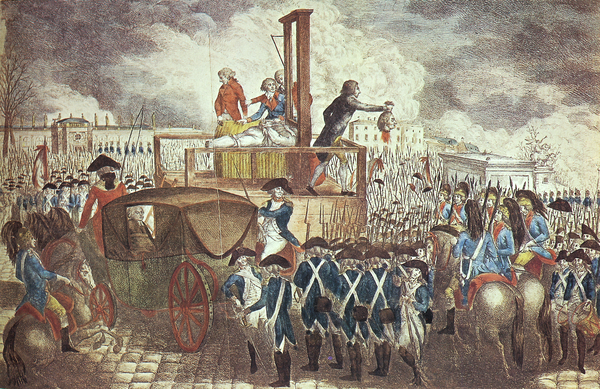
Despite being a century later and miles away in Europe, public executions played just as significant of a role through the French Revolution, which took place from 1789 to 1799 (Library of Congress). The guillotine, which was introduced as a more “humane” method of execution, became a symbol of revolutionary justice (Grey). Public squares, such as the Place de la Concorde in Paris, were used as places to hold executions of prominent figures like King Louis XVI and Queen Marie Antoinette (Jaggard). These events transformed executions into spectacles through instilling fear in those who opposed the revolution. Crowds gathered for these events not only for political support but also for their own entertainment.

During 18th century England, public hangings became increasingly common as a method of preventing crime. Tyburn Tree was a famous execution site in London. It hosted public events where the accused would parade through the streets before being executed. Thousands of people attended these executions, and the ceremony caused excitement in the community (Johnson). Public hangings were extremely popular, with audiences reaching around 200,000. Large crowds gathered not just for the death itself but the speeches before the executions (Look Up London).

Another example comes from medieval Europe’s use of burning at the stake, often for individuals accused of treason. Joan of Arc, who was burned in 1431 in Rouen, France, demonstrates how public executions were as much about symbolism as punishment (Kennedy). Joan’s death was intended to control the public and instill fear, but her execution backfired as Joan inspired resistance. (Kennedy).
These many historic examples clearly show that public executions were not only ways of capital punishment but also communal entertainment and a warning to maintain societal order.
The ritualistic violence of public executions draws a parallel to Shirley Jackson’s The Lottery. Similar to the historical communities justifying public executions for order and tradition, the villagers in Jackson’s story rationalize the lottery as essential for their well being, including ensuring a good harvest. Both examples reveal how societies normalize brutality, allowing violent traditions to persist even as their original purpose fades. Jackson’s work unwraps the ethical implications of communal violence and the dangers of blindly following tradition.
Connecting The History of Public Executions to The Lottery
Exploring the historical context of public executions provides valuable knowledge and insight into Shirley Jackson’s The Lottery. As the story is often read as a critique of blind tradition, The Lottery takes on deeper meaning when connected to the ritualistic violence of public executions. Both show how societal customs can normalize cruelty, transforming acts of violence into collective rituals.
One key example is “Although the villagers had forgotten the ritual and lost the original black box, they still remembered to use stones” (Jackson). This line successfully shows how although the lottery’s original purpose has been forgotten, the ritual maintains its grasp on the town. This can be similarly compared to how public executions continued even when their effectiveness was questioned. The villagers and their commitment to the tradition can be compared to historical communities that held on to public executions despite growing moral and ethical objections.
Another example from the text is when Mrs. Hutchinson is eventually selected and desperately cries out “It isn’t fair, it isn’t right” (Jackson). This reveals the inhumanity at the heart of these communal acts of violence. Her protests are ignored since the villagers prioritize maintaining the tradition over her life. This reflects the behavior of historical crowds that participated in or observed public executions, prioritizing communal violence over empathy. This detachment indicates how societal norms can devalue individual humanity in favor of collective order.
In The Lottery, the dehumanization of the victim is evident in the villagers’ participation in the stoning. Similar to how scapegoating played a role in the Salem Witch Trials, Mrs. Hutchinson quickly becomes the chosen scapegoat and her transformation from a neighbor and village member to a target of collective violence reflects the same process seen in public executions. In those executions, the accused are often also dehumanized to justify their punishment. This dehumanization made the violence more acceptable. Audiences were emotionally distanced, seeing the condemned as less than human. The ritual stoning reflects how societies justify brutal acts through the dehumanizing victims.
Since societal complicity was essential to the continuation of public executions, which were often seen as moral and necessary, communities accepted these events as a normal part of life. The townspeople’s participation in stoning Tessie Hutchinson reflects complicity in normalized violence.
By understanding the ritualistic and communal elements of public executions, readers can appreciate Shirley Jackson’s critique of conformity and tradition. The story serves as a warning, not just about the dangers of outdated practices but also about how societal structures perpetuate violence in the form of unity and stability. Therefore, this historical perspective helps the reader better understand Jackson’s short story.
Works Cited
Floyd, Trevor. “Don’t Lose Your Head: Why Were Executions Public?” Marin Theatre, www.marintheatre.org/press-release-details/160/dont-lose-your-head-why-were-executions-public. Accessed 11 Dec. 2024.
Franklin, Ruth. “75 Years Ago, ‘the Lottery’ Went Viral. There’s a Reason We’re Still Talking about It.” The New York Times, The New York Times, 26 June 2023, www.nytimes.com/2023/06/26/opinion/the-lottery-fiction.html. Accessed 11 Dec. 2024.
Gaskill, Malcolm. “Salem Witch Trials, Colonial America, Puritanism, Mass Hysteria, Witchcraft, 1692, Religious Extremism, Legal Trials.” Bill of Rights Institute, billofrightsinstitute.org/essays/the-salem-witch-trials. Accessed 11 Dec. 2024.
Grey, Orrin. “The Invention of the Guillotine and Its Role in the French Reign of Terror.” Explore the Archive, 26 Apr. 2022, explorethearchive.com/invention-of-the-guillotine. Accessed 11 Dec. 2024.
Jackson, Shirley. The Lottery. The New Yorker, 1948.
Jaggard, David. “A Slice of Death: Chasing the Shadow of the Guillotine.” Paris Update, 9 Dec. 2023, www.parisupdate.com/a-slice-of-death-chasing-the-shadow-of-the-guillotine/. Accessed 11 Dec. 2024.
Johnson, Ben. “Tyburn Tree and Speakers Corner, London.” Historic UK, 27 Nov. 2023, www.historic-uk.com/HistoryMagazine/DestinationsUK/Tyburn-Tree-Speakers-Corner/. Accessed 11 Dec. 2024.
Kennedy, Lesley. “Why Was Joan of Arc Burned at the Stake?” History.Com, A&E Television Networks, 30 May 2023, www.history.com/news/joan-arc-burned-stake. Accessed 11 Dec. 2024.
Linders, Annulla. “The Execution Spectacle and State Legitimacy: The Changing Nature of the American Execution Audience, 1833-1937.” Law & Society Review, vol. 36, no. 3, 2002, pp. 607–56. JSTOR, https://doi.org/10.2307/1512164.
“Research Guides: France: Women in the Revolution: Revolutions in France: 1789, 1830, 1848.” Revolutions in France: 1789, 1830, 1848 – France: Women in the Revolution – Research Guides at Library of Congress, guides.loc.gov/women-in-the-french-revolution/revolutions-rebellions/1789-1830-1848. Accessed 11 Dec. 2024.
“Salem Witch Trials ‑ Events, Facts & Victims.” History.Com, A&E Television Networks, www.history.com/topics/colonial-america/salem-witch-trials. Accessed 11 Dec. 2024.
“Shirley Jackson: Themes & Symbols in the Lottery and Other Works.” Shirley Jackson, www.gale.com/open-access/shirley-jackson. Accessed 11 Dec. 2024.
Wignall, Katie. “Tyburn Tree: The Hidden History at Marble Arch: Look up London.” Look Up London Tours, 26 Mar. 2019, lookup.london/tyburn-tree-hidden-history-marble-arch/. Accessed 11 Dec. 2024.