Angela Carter

From the Fay Godwin Archive at the British Library
English author, Angela Carter, was best known for her horror adjacent works. Carter’s works took inspiration from “classic European fairy tales” and incorporated aspects of modern horror (Acocella). While her works relied on fairytale influence, Carter’s writing was also greatly influenced by her personal life. Despite Carter’s typical middle class upbringing in London, England, Carter’s early adult life was filled with hardships including her early divorce, affairs, experience with depression, and the death of her mother. Her life experiences contributed to her feminist views. Carter’s beliefs and behaviors, along with her peculiar writing style, created a generally poor public perception of her (Acocella). Although Carter had a small following, she received little to no recognition for her works during her lifetime.
Carter believed women could “seize what they needed—power, freedom, sex—and she saw no fundamental difference between the sexes that could prevent that” (Acocella).
“The Werewolf” by Angela Carter
One of Carter’s many stories that has gained recognition following her death is her short story “The Werewolf”. First published in 1979, “The Werewolf”, is Carter’s adaptation of Little Red Riding hood. Ironically, the short story was published during the second wave of feminism which occurred from the 1960’s through 1970’s. “The Werewolf” tells the story of a young girl who, on the way to her grandmothers house, encounters a wolf. Instead of running from the wolf, the girl attacks the beast and cuts off its paw with her fathers knife. When she arrives to her grandmother’s house, the girl uncovers that the wolf she had killed was her grandmother when the girl realizes her grandmother is missing a hand. The girl and her neighboors accuse the grandmother of witchcraft and stone her to death. “The Werewolf” clearly shows Carter’s feminist views when the protagonist bravely kills the witch

without regard for her familial attachment to her grandmother. Although it was first published in the 20th century, “The Werewolf” transports readers to the 16th and 17th century witch hunts of Western Europe. Through her allusion to the witch hunts, Carter produces a piece of feminist literature that critiques patriarchal society.
The Witch Craze
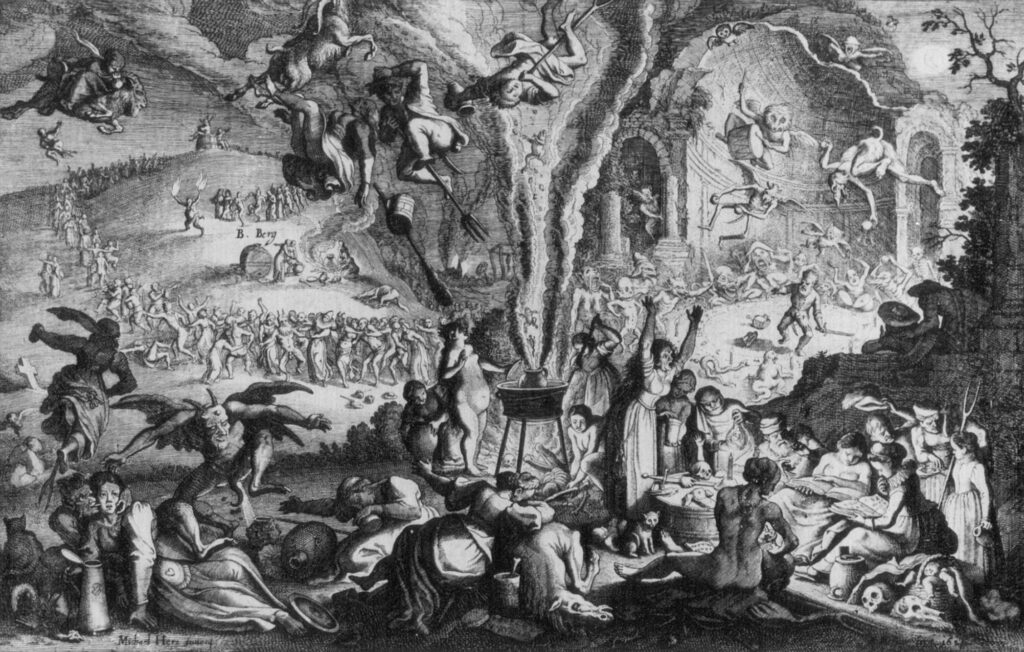
Carter’s short story “The Werewolf” alludes to the Witch Hunts that occurred in Western Europe during the 16th and 17th centuries. These Witch Hunts were large scale executions of individuals suspected of practicing ‘witchcraft’ in Southwestern Germany and
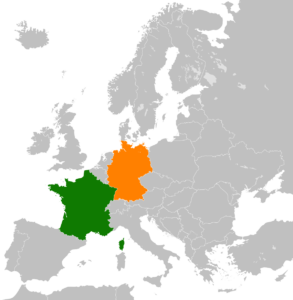
France (Berkeley Law). The accused were typically women. Although witch trials had previously been carried out in these areas, never before had they occurred on such a large scale. During the 14th and 15th centuries “trials usually involved only one or two victims” and were not limited to women (Hoak 1270). In comparison, the trials from 1570-1630 executed hundreds of ‘witches’ at a time, 4 out of 5 of which were women (Hoak 1271). In addition to gender, social status also played a role in who was accused of witchcraft. The later witch trials targeted women who were “impoverished, elderly ones, unmarried or widowed, and vagabonds of the rural or urban working class” (Hoak 1271). Although those accused of witchcraft were typically outcasts who were wrongly targeted by village culture, some historians believe that the rumors of witchcraft in Europe originated from the persecution of a pre-christian cult ( Monter 438). This cult
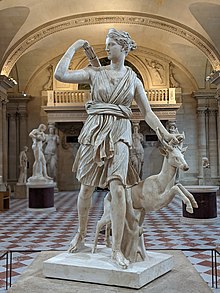
worshiped the Greek goddess Diana, the patron goddess of hunting and animals who is often associated with childbirth and fertility (Monter 438). Fittingly, the cult of Diana was a fertility cult, fertility referring to childbearing and the fertility of land (Monter 438). The suspected existence of the Diana cult caused a frenzy in European society as they began seeking out those suspected of witchcraft.
Causing the Craze
Cult presences along with the Protestant Reformation, unexplainable events, and social strife lead to the 16th and 17th century witch craze. The Protestant Reformation spread Protestantism across Europe. The sects of Europe where trials were prominent had preexisting traditions of devil lore (Hoak 1273). These preexisting obsessions combined with the spread of Protestantism created increased belief in devil books and devil lore. As Protestants sought to fight against the witches and ‘the devil,’ their actions created competition with the Catholic church which further fueled the witch trials. Through the witch trials the Protestants and Catholics competed for followers “as proof that they were the best church to join if you wanted protection from Satan” (Little) In addition, unexplainable events like the spread of disease, inflation, and war, could be blamed on the devil and his allies, the witches. In an effort to explain unexplainable conditions “cunning women, midwives, and healers” were accused of witchcraft because of their “sex and marginal economic status” ( Hoak 1273). Finally, social strife also played a role in causing the witch craze. Through the witch trials Dominican Inquisitors attempted to “ root out social nonconformity” in Europe ( Monter 440).
Identifying and Punishing “Witches”
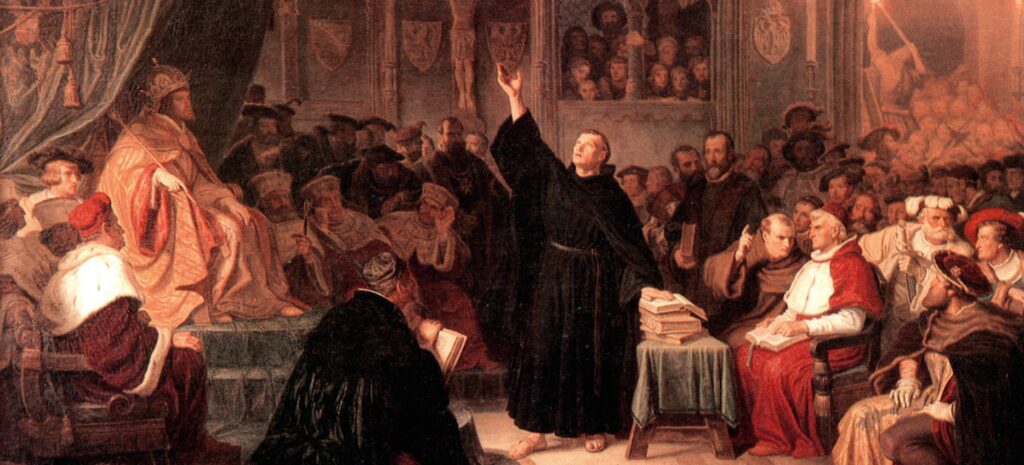
Witches were identified using a book called the Malleus Maleficarum. The misogynistic Malleus Maleficarum ( Witch’s Hammer) was a guide for witch hunters on how to identify and punish witches. The book’s three parts aim to prove to readers that witches are more likely women than men (Berkeley Law). In most European witch hunts a suspected witch had to be accused by three neighbors ( Nitschke). One common sign that led others to accuse women of witchcraft were any marks on a woman’s skin including moles, skin tags, aging spots, or birthmarks” (Nitschke). These spots were supposedly what witches “used to suckle her “familiar” — a demon that helped the witch in their evil-doing” (Nitschke). Some believed they could uncover witches by pricking them with needles to see if they bleed (Nitschke). Finally, many witches were tested using a method referred
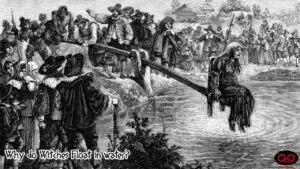
to as “the swimming witches”. This method forced accused women to swim naked. If the witch floated the people took that as a sign of the water rejecting her and pronounced her a witch. If the accused woman sank, she often drowned (Nitschke). Witches that did not die during torture were usually punished by being burned at the stake, hanged, or beheaded (Nitschke).
The Trials at Trier
One of the most famous mass trials that occurred during the witch craze took place in Trier, Germany. The trials began in 1581 and continued for over six years. Motivated by religion, the Archbishop Johann von Schöneburg, ordered executions of Protestants, Jews, and witches (Holland). After six years, 368 accused individuals were burned alive after being forced to confess. Of the 368 accused witches, “Almost one third were nobility or held positions in the government or local administration, including judges, burgermeisters, councilors, canons and parish priests” (Holland). The Trier trials indicate the political nature behind many of the witch accusations.
Carter’s use of Historical Allusion
Closely examining the history of the European witch trials allows readers to better understand Angela Carter’s “The Werewolf”. In the short story, Carter references the witch hunts saying “ The devil holds picnics in the graveyards and invites the witches; then dig up fresh corpses, and eat them. Anyone will tell you that” ( Carter 118). Starting her story like this allows Carter to establish the cultural basis for the beliefs in witchcraft and witch hunts. Carter makes other allusions to witch lore throughout her story. For example, Carter explains that a concept of a witches familiar and the witches mark. Carter writes that a familiar “ follows her about all the time, they strip the crone, search for her marks, for the supernumerary nipple her familiar sucks” (Carter 118). The witches mark, usually a skin tag or mole, was used to accuse someone of witchcraft. Through understanding the broader historical context of the European witch trials, readers become aware of Carter’s ironic tone. Obviously, in modern society, readers recognize that witchcraft does not exist. Carter, who also writes from a modern perspective includes lines like “ of course” and “they soon find it” to illustrate European societies mass obsession with witchcraft and their determination to oust witches despite their non existence. Additionally, the historical context of the witch hunts provides insight into Carter’s feminist views. Originally, “The Werewolf” appears as a feminist text. The powerful symbol of a young girl killing the wolf witch with her father’s sword invokes feelings of feminist power. However, later in the text Carter writes that when they found the witches’ nipples they beat “her old carcass as far as the edge of the forest, and pelted her with stones until she fell down dead” ( Carter 120). Here, it is important to note that the witches’ nipples are usually signs of aging in women. Skin tags, moles, and sagging breasts are all natural signs of aging but also signs of witchcraft that could be used to accuse a woman of being a witch. This once again shows the European witch trials targeted women, specifically older women. The final section of the short story reveals that Carter’s seemingly feminist text relies on a historical allusion that portrays women negatively to prove her claim. This further contributes to the ironic nature of the text and allows Carter to critique patriarchal conditions of 16th and 17th century Europe.
Works Cited
Acocella, Joan. “Angela Carter’s Feminist Mythology.” The New Yorker, 6 Mar. 2017, www.newyorker.com/magazine/2017/03/13/angela-carters-feminist-mythology.
Carter, Angela. “The Werewolf.” The Bloody Chamber, Gollancz, 1979, pp. 118-120.
Hoak, Dale. “The Great European Witch-Hunts: A Historical Perspective.” American Journal of Sociology, vol. 88, no. 6, 1983, pp. 1270–74. JSTOR,http://www.jstor.org/stable/2778975. Accessed 10 Dec. 2024.
Holland, Brynn. “Beyond Salem: 6 Lesser‑known Witch Trials.” History.Com, A&E Television Networks, www.history.com/news/beyond-salem-6-lesser-known-witch-trials. Accessed 10 Dec. 2024.
Little, Becky. “How Early Churches Used Witch Hunts to Gain More Followers.” History.Com, A&E Television Networks, www.history.com/news/how-churches-used-witch-hunts-to -gain-more-followers. Accessed 10 Dec. 2024.
Monter, E. William. “The Historiography of European Witchcraft: Progress and Prospects.” The Journal of Interdisciplinary History, vol. 2, no. 4, 1972, pp. 435–51. JSTOR, https://doi.org/10.2307/202315. Accessed 10 Dec. 2024.
“Witch Trials in Early Modern Europe and New England.” Berkeley Law, 7 Sept. 2022, www.law.berkeley.edu/research/the-robbins-collection/exhibitions/witch-trials-in-early-modern-europe-and-new-england/.