-
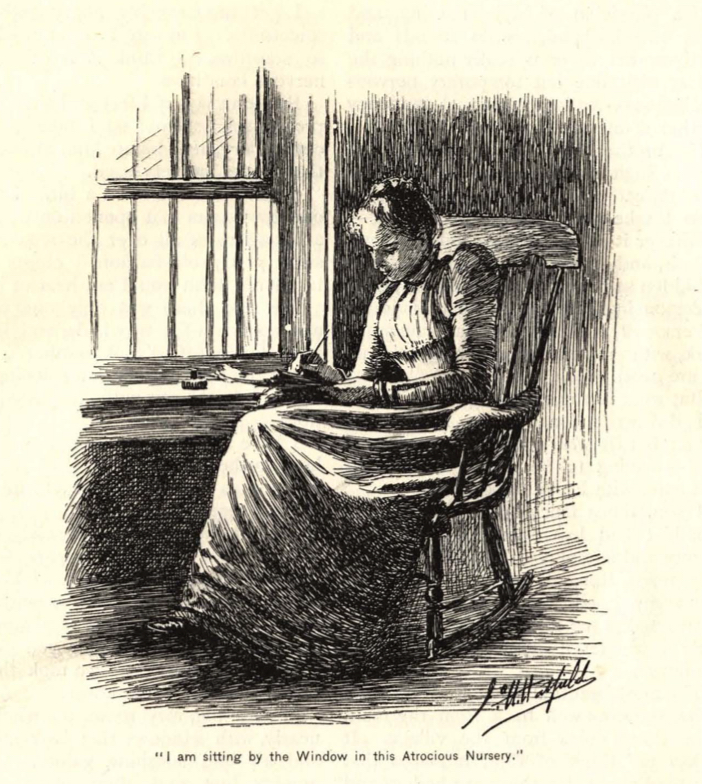
How the poor living conditions of mental institutions are reflected in The Yellow Wallpaper by Charlotte Perkins Gilman
-
How the poor living conditions of mental institutions are reflected in The Yellow Wallpaper by Charlotte Perkins Gilman
By: Karla Ramos Salcedo
The Yellow Wallpaper
The Yellow Wallpaper is a short story by Charlotte Perkins Gilman set in the late 1800s that follows a new mother receiving what was once referred to as the “Rest Cure”. Throughout the short story, we witness the mother slowly descend into madness while being isolated and left with nothing to do.
Who Was Charlotte Perkins Gilman?
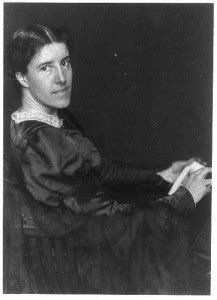
Charlotte Perkins Gilman was born on July 3, 1860. Gilman was known as an American writer, feminist and activist whose theories and activism were outlined in her works such as Herland and Women and Economics. Throughout her life, Gilman wrote multiple impressive works, her most prominent being The Yellow Wallpaper, a short story Gilman wrote after receiving the “Rest Cure” to treat her post-partum depression. (Gagnon, p.1). This short story would later on be considered to be her auto biography.
Summary of The Yellow Wallpaper
The Yellow Wallpaper follows the narrator -a new mother- who is receiving the “rest cure”. The “rest cure” is defined by Marriam Webster as a “treatment of disease (as tuberculosis) by rest and isolation in a good hygienic environment” (Marriam Webster). However, the narrator’s experience was far worse than the definition would imply. In the short story, the narrator is taken to a secluded building and placed in a wing, further isolating her. Through her description of the room, we are shown that she was placed in an unhygienic, uncared for, and cold environment with nothing to do.
In this cold isolation, the woman becomes obsessed with the “horrid” yellow wallpaper that surrounds her in this room. We slowly see the woman’s mental health deteriorate as she becomes convinced that there is a woman in the wallpaper, causing her to eventually tear and rip down the wallpaper in hopes of freeing the woman.
By the end of this short story, the narrator has gone insane, believing that because she tore down the yellow wallpaper, she is free to “creep around”.
The Poor Living Conditions of Mental Institutions in the 1800s
In the late 1800s (when The Yellow Wallpaper takes place), mental health was heavily stigmatized, often rendered as taboo or sinful. In 2015’s Shrinks: The Untold Story of Psychiatry, Jeffrey A. Lieberman claims “the mentally ill were considered social deviants or moral misfits suffering divine punishment for some inexcusable transgression.” (Lieberman, 2015). The dehumanization of the mentally ill during this time in history made the poor treatment of these people socially acceptable. This social norm would also be reflected in the mental institutions established to “help” the mentally ill. Lieberman would continue to say that “the purpose of the earliest mental institutions was neither treatment nor cure, but rather the enforced segregation of inmates from society,” (Lieberman, 2015). Due to the prevalent dehumanization of the mentally ill, it was made much easier to separate the mentally ill from society and place them in isolated, poor conditions.
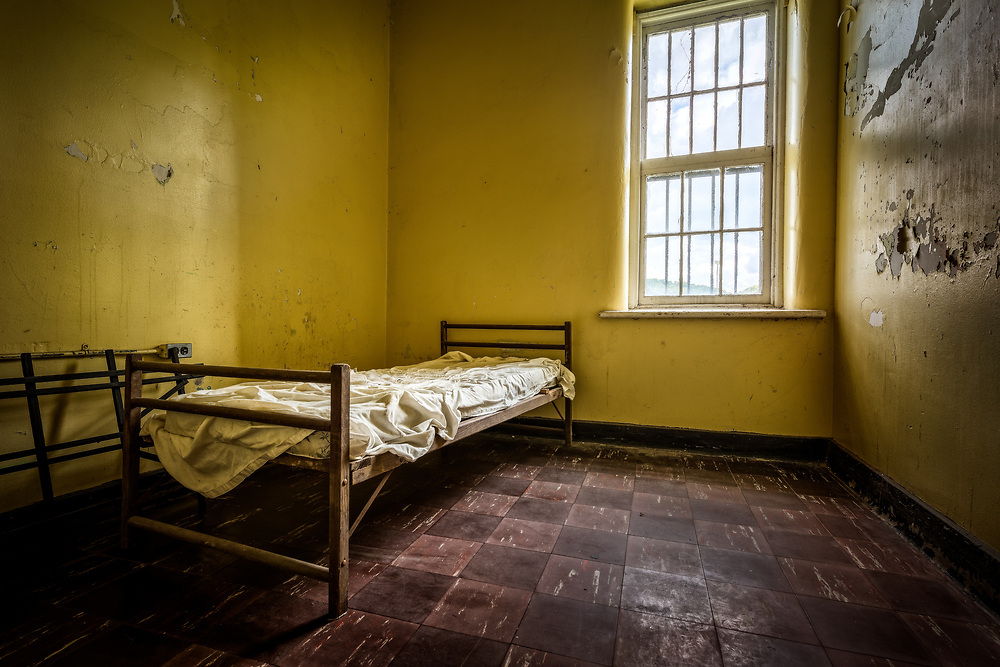
Within these mental institutions, inmates were subjected to horrifying treatment and inhumane conditions. Asylums would use harsh methods for treatment such as chaining patients to walls, 24-hour restraints in beds, and isolation (Offenberger, Kama and Cirrelia Thaxton). These methods were used on inmates to “tame” or “discipline” them so that they would be less likely to act out or show behavioral issues. The Science Museum of the UK claims these restraints stopped patients from self-harming or harming others (Science Museum, 2024). These inhumane practices were justified as a cautionary measure to protect patients; however, the reality shows that this was another method of degradation, keeping patients chained and neglected.
Patients who lived in these institutions experienced horrors as such every day for excruciatingly long periods of time, often non-stop. Because of these constant stressors, many inmates would die. Tara Thiagarajan of Sapien Labs claims that many “spent their days chained to the wall in filth and cold until death” (Thiagarajan, 2018). Inmates of these mental institutions were neglected and left isolated in cold and unhygienic conditions with little to no food until their bodies succumbed to death. This reflects the neglectful and abusive conditions in which many inmates found themselves living in.
The Experience of Ann H. Titus
“They were neglectful and cruel.”
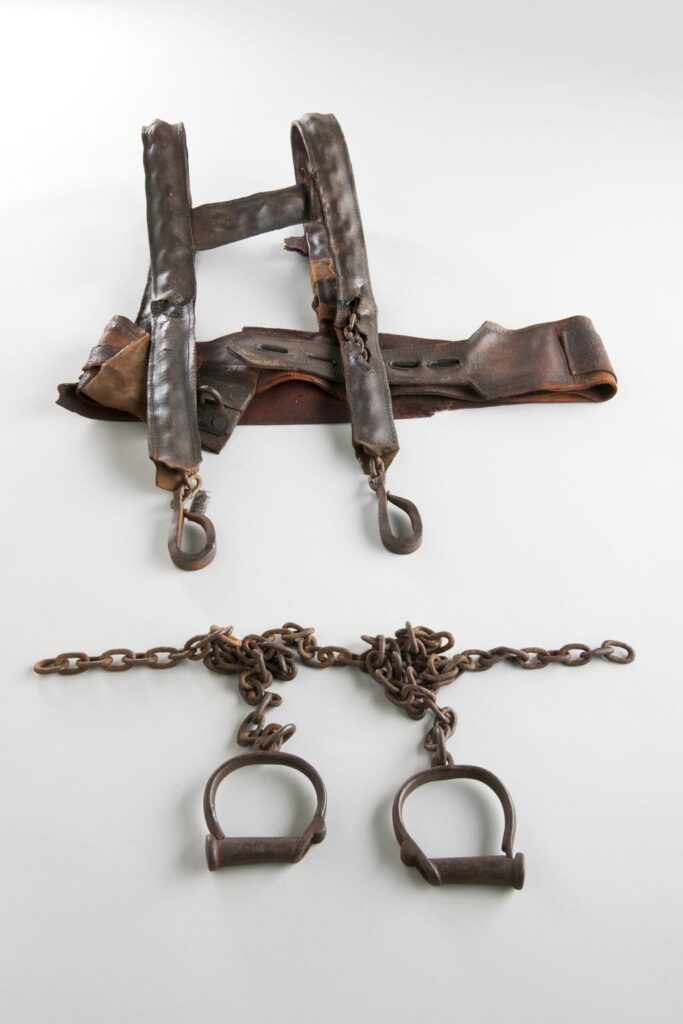
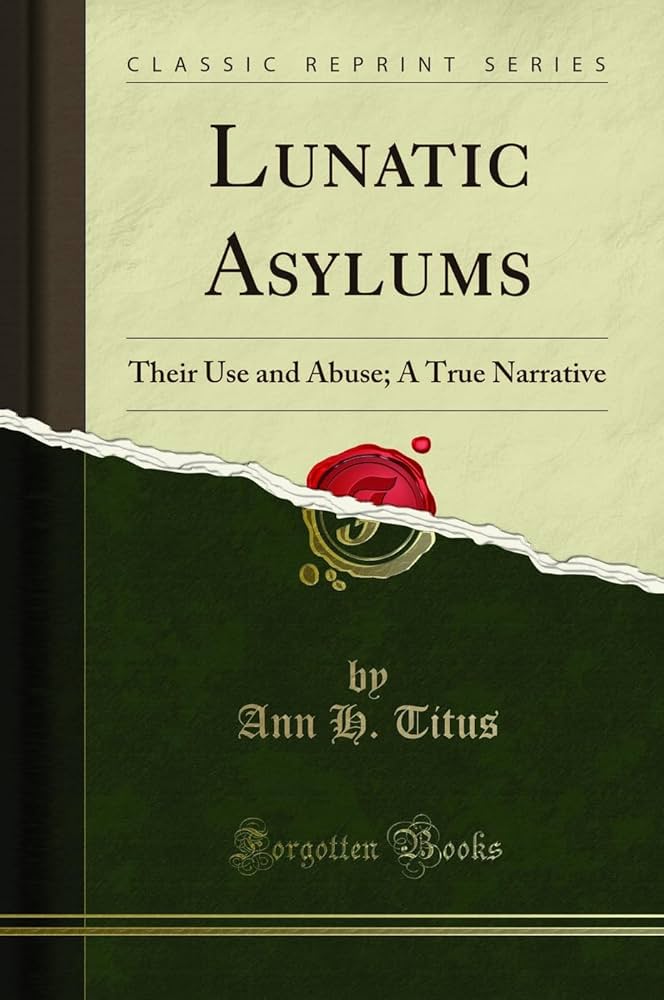
In her 1870 novel, Lunatic Asylums. Their Use and Abuse. A True Narrative., Ann H. Titus recounts her experience living in a mental institution. Titus was once known as a “worthy wife”, “first-rate housekeeper”, and good mother as she cared for her husband and 6 children. (pp.4&5). However, her life was quickly changed when baseless rumors of her being crazy began to spread around her town. Though baseless, these rumors were taken as fact by not only her neighbors and peers, but her family members as well. As a result, Titus’s first-born daughter would conspire with her uncle (Ann’s brother) to trick Ann into believing they were going on vacation, when in reality they took her to a mental institution.
In this mental institution, Titus would describe the “wing” she was sent to as isolated, in an “upstairs room” which was poorly furnished. (p.10). She would follow this description by detailing an awful smell of opium. However, her treatment was just as horrific. Titus would later claim she was deprived of clothes, sheets, and was sick for 6 days (p.12).
Understanding the Conditions the Narrator is Subjected to in The Yellow Wallpaper
When initially reading The Yellow Wallpaper, it is easy for readers to be confused by where exactly the narrator is staying seeing as she describes the room she is placed in as a “nursery” (p.648). However, with the knowledge and context of the “Rest Cure” and the conditions of mental institutions of that time, we can understand that the narrator is actually being kept in a mental institution. In the story, the narrator recalls “barred windows”, “rings and things on the walls”, “stripped paint and paper”, and the floor being “scratched and gouged and splintered” (pp.648 & 650). This description of the “nursery” the narrator finds herself in mirrors those of the rooms in which institutionalized individuals were placed as we examined earlier.
With this historical context, readers are able to visualize the conditions the narrator is living in and understand that she is not a reliable narrator because she lacks an understanding of her surroundings and predicament. Comparing the “nursery” to the rooms of institutionalized individuals allows readers to view the actions and thoughts of the narrator through the lens of a woman placed in a mental institution. Knowing the conditions institutionalized individuals were placed in and the outcome of their treatment also allows readers to prepare themselves for the possibility that the narrator could die or go insane. As readers enjoy this story, with the context of the neglect and foul treatment of the mentally ill, they are able to analyze the narrator’s living conditions and how her treatment contributed to her deteriorating mental health.
Works Cited
- Arnold, Walter. “Yellow Room- Trans-Allegheny Lunatic Asylum”. Walter Arnold Photography. 2018
- Gagnon, Amy. “Charlotte Perkins Gilman”. Connecticut History. March 28, 2023.
- Lieberman, Jeffrey and Ogi Ogas. “Shrinks: The Untold Story of Psychiatry”. March 15, 2015.
- Offenberger, Kama and Cirrelia Thaxton. “Insane Asylums in the 1800s | History and Famous Mental Hospitals”. Study.com Accessed 10 Dec 2024.
- Perkins Stetson, Charlotte. “The Yellow Wallpaper” January 1892.
- “Rest cure.” Merriam-Webster.com Medical Dictionary, Merriam-Webster, https://www.merriam-webster.com/medical/rest%20cure. Accessed 11 Dec. 2024.
- Science Museum Group Collection. “A Victorian Mental Asylum”. The Science Museum UK. June 13, 2018.
- Thiagarajan, Tara. “Lunatic Asylums of the 1800s”. Sapien Labs. September 10, 2018.
- Titus, Ann. “Lunatic Asylums. Their Use and Abuse. A True Narrative.”. 1870.